GNSS / INS
VN-210
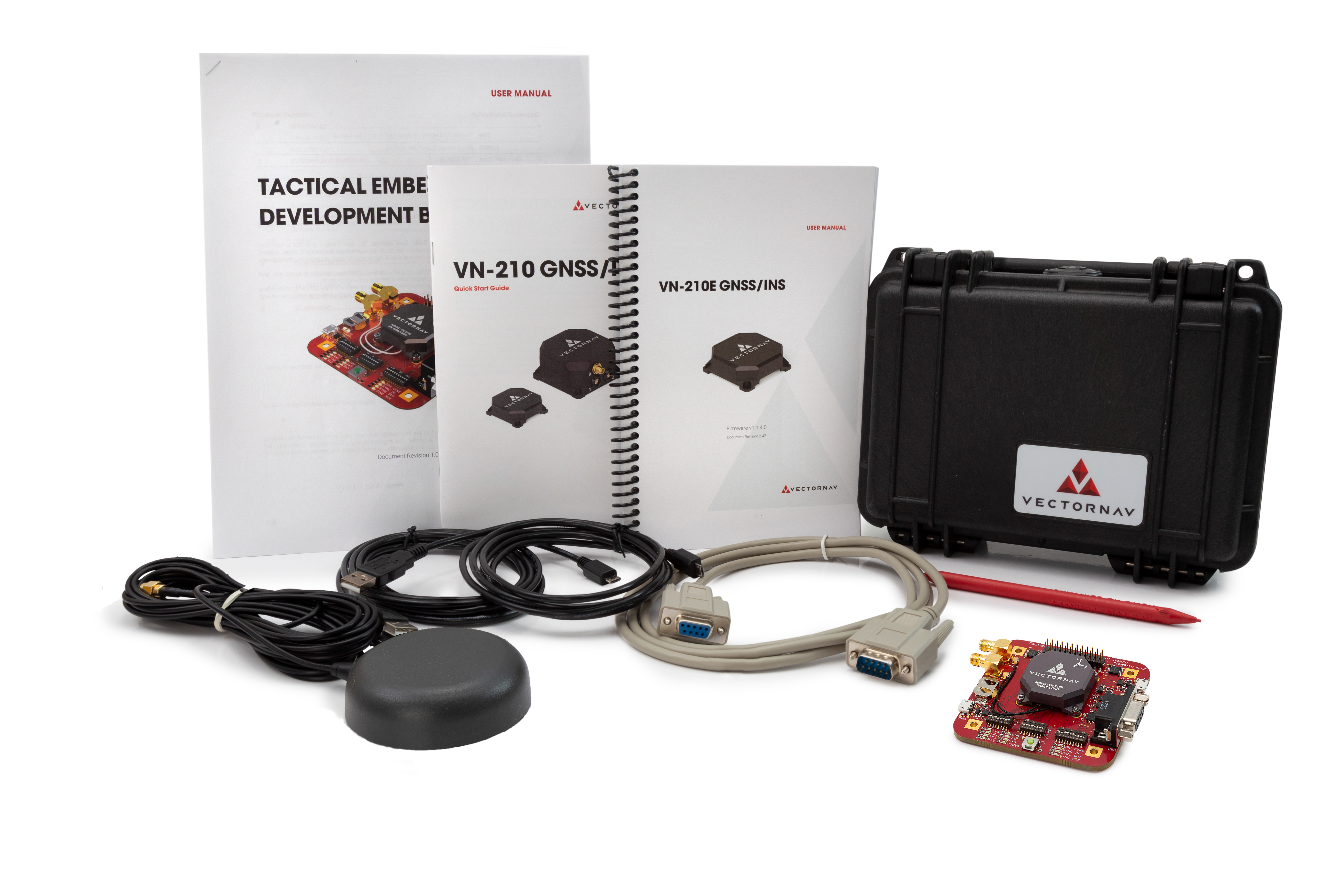
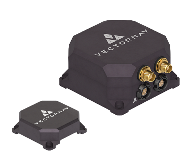
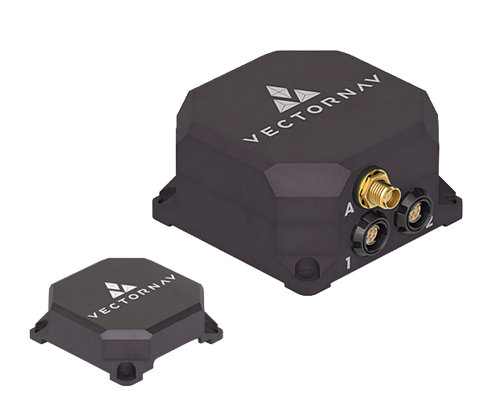
The VN-210 is a tactical-grade, high-performance GNSS-Aided Inertial Navigation System (GNSS/INS) incorporating the latest inertial sensor and GNSS technology. The VN-210 combines a 3-axis accelerometer, a 3-axis gyro, a 3-axis magnetometer, a Multi-band GNSS receiver into a compact embedded module or ruggedized packaging option to deliver a high-accuracy position, velocity and attitude solution.
0.05˚- 0.1˚
Dynamic Heading
0.015˚
Dynamic Pitch/Roll
0.6°/hr
Gyro In-Run Bias
VN-210
Multi-Band GNSS
Integrated L1/L2/E1/E5b GNSS Receiver
Rugged Device Design
IP-68, DO-160G, MIL-STD-1275E, MIL-STD-461G, MIL-STD-810G
External M-Code
Support for external SAASM / M-Code GPS (ICD-GPS-153)
High Data Rate
400 Hz Navigation Data 800 Hz IMU Data
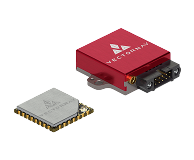
VN-210 E
Multi-Band GNSS
Integrated L1/L2/E1/E5b GNSS Receiver
Ultra-Low SWaP
31 x 31 x 12 mm 14 grams; < 1.5 W
External M-Code
Support for external SAASM / M-Code GPS (ICD-GPS-153)
Blue UAS Framework
NDAA-compliant and cybersecurity tested
VN-210 -S
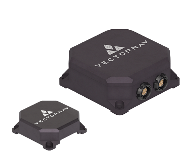
The VN-210-S is a tactical-grade, high-performance GNSS-Aided Inertial Navigation System (GNSS/INS) that combines 3-axis gyros, accelerometers, and magnetometers, a tri-band L1/L2/L5/E1/E5a/b GNSS receiver, and advanced Kalman filtering algorithms to provide optimal estimates of position, velocity, and attitude. The VN-210-S is available in a precision-milled, anodized aluminum enclosure. For ultra-low SWaP applications, the VN-210E (Embedded) can be integrated externally with the GNSS receiver found inside the VN-210-S.
Tri-band GNSS
Integrated L1/L2/L5/E1/E5a/b GNSS Receiver
High Rate Data
400 Hz Navigation Data 800 Hz IMU Data
Ultra Low SWaP
56 x 56 x 31 mm 170 grams; < 3.3 W
Rugged Device Design
Designed to DO-160G, MIL-STD-1275E, MIL-STD-461G, MIL-STD-810G; IP-68 Rated
VN-210 -S-ERV
The VN-210-S-ERV is a tactical-grade, high-performance GNSS-Aided Inertial Navigation System (GNSS/INS) that combines 3-axis accelerometers, gyros, and magnetometers, a tri-band GNSS receiver with anti-jamming/anti-spoofing technology, and proprietary onboard Kalman filtering algorithms to provide optimal output of position, velocity, and attitude. The VN-210-S-ERV supports an expanded operational envelope, making it ideal for hypersonic vehicles, cruise missiles, loitering munitions, and other high-dynamic aerospace and defense applications.
Contact sales@vectornav.com for more information.
High Dynamic Operations
Designed for demanding flight regimes
Tri-band GNSS
Integrated tri-band GNSS Receiver with anti-jamming/anti-spoofing technology
High Rate Data
400 Hz Navigation Data 800 Hz IMU Data
Rugged Device Design
Designed to DO-160G, MIL-STD-1275E, MIL-STD-461G, MIL-STD-810G; IP-68 Rated
Specifications
ATTITUDE
Range (Heading/Yaw, Roll)
± 180°Range (Pitch)
± 90°Heading (Magnetic)*1
2.0° RMSHeading (INS)*2
0.05°-0.1°, 1σPitch/Roll (Static)
0.05° RMSPitch/Roll (INS)*3
0.015°, 1σHeading Mounting Misalignment (VN-210)*4
<0.05°, 1σPitch/Roll Mounting Misalignment*4
<0.05°, 1σAngular Resolution
0.001°POSITION/VELOCITY
Horizontal Position Accuracy*4
1.0 m RMSVertical Position Accuracy*4
1.5 m RMSRTK Position Accuracy*6
0.01m + 1ppm CEPFree Inertial Position Drift*7
0.5 cm/s²Velocity Accuracy
< 0.02 m/s*2Dependant on a number of factors, contact VectorNav to discuss expected performance in your application
*3With sufficient motion for dynamic alignment.
*4Constant on a per part basis. Can be calibrated out during system integration using boresighting or other alignment processes.
*5With SBAS, clear view of GNSS satellites, good multipath environment, compatible GNSS antenna, and as measured over a 24 hour period.
*6Measured using 1km baseline and patch antennas with good ground planes. Does not account for possible antenna phase center offset errors. ppm limited to baselines up to 20km.
*7Typical rate of growth in error of position estimates after loss of GNSS signal, provided INS full alignment prior to loss.
Range
±15 gIn-Run Bias Stability
< 10 μgNoise Density
< 0.04 mg/√HzBandwidth
200 HzCross-Axis Sensitivity
±0.05°Range*1
±490°/s (Optional ±2000°/s)In-Run Bias Stability
< 1°/hr (0.6°/hr typ.)Noise Density
5°/hr /√HzBandwidth
210 HzCross-Axis Sensitivity
< 0.05°Range
±2.5 GaussIn-Run Bias Stability
-Noise Density
140 μGauss/√HzSample Rate
250 HZCross-Axis Sensitivity
±0.05°Receiver Type
184-Channel, L1/L2/E5b GNSSTime-to-First-Fix (Cold)
29 sTime-to-First-Fix (Hot)
1 sAltitude Limit
50,000 mVelocity Limit
500 m/sSize
56 x 56 x 31 mmWeight
155 gInterface Connector
Circular Push-Pull Fischer UltiMate (10-pin x 2; Size 7)GNSS Connector
SMAInput Voltage
12 to 34 VCurrent Draw*1
110mA @ 24 VPower*1
< 2.7 WDigital Interface*2
RS-422Baud Rate
Up to 921,600GNSS PPS
30ns RMS, 60 ns 99%Input
Sync-InOutput
Sync-Out*2 VN-210: Optional RS-232 on Primary Port
Operating Temperature
-40° to +85° CStorage Temperature
-40° to +85° CMTBF
> 21,000 hoursSpecifications
Range (Heading/Yaw, Roll)
± 180°Range (Pitch)
± 90°Heading (Magnetic)*1
2.0° RMSHeading (INS)*2
0.05°-0.1°, 1σPitch/Roll (Static)
0.05° RMSPitch/Roll (INS)*3
0.015°, 1σHeading Mounting Misalignment (VN-210E)*4
0.15°, 1σPitch/Roll Mounting Misalignment*4
<0.05°, 1σAngular Resolution
0.001°Horizontal Position Accuracy*5
2.5 m RMSVertical Position Accuracy*5
2.5 m RMSRTK Position Accuracy*6
0.01m + 1ppm CEPFree Inertial Position Drift*7
0.5 cm/s2Velocity Accuracy
< 0.02 m/s*2Dependant on a number of factors, contact VectorNav to discuss expected performance in your application
*3With sufficient motion for dynamic alignment.
*4Constant on a per part basis. Can be calibrated out during system integration using boresighting or other alignment processes.
*5With SBAS, clear view of GNSS satellites, good multipath environment, compatible GNSS antenna, and as measured over a 24 hour period.
*6Measured using 1km baseline and patch antennas with good ground planes. Does not account for possible antenna phase center offset errors. ppm limited to baselines up to 20km.
*7Typical rate of growth in error of position estimates after loss of GNSS signal, provided INS full alignment prior to loss.
Range
±15 gIn-Run Bias Stability
< 10 μgNoise Density
0.04 mg/√HzBandwidth
200 HzCross-Axis Sensitivity
±0.05°Range*1
±490°/sIn-Run Bias Stability
< 1°/hr (0.6°/hr typ.)Noise Density
5°/hr /√HzBandwidth
210 HzCross-Axis Sensitivity
< 0.05°Range
±2.5 GaussIn-Run Bias Stability
-Noise Density
140 μGauss/√HzBandwidth
200 HZCross-Axis Sensitivity
±0.05°Receiver Type
184-Channel, L1/L2/E5b GNSSTime-to-First-Fix (Cold)
29 sTime-to-First-Fix (Hot)
1 sAltitude Limit
50,000 mVelocity Limit
500 m/sInterface Connector
24-pin CLRGNSS Connector
U. FLSize
31 x 31 x 12 mmWeight
14 gBaud Rate
Up to 921,600GNSS PPS
30ns RMS, 60 ns 99%Input
Sync-InOutput
Sync-OutInput Voltage
3.2 V to 3.5 VCurrent Draw*1
280mA @ 3.3 VPower*1
1 WDigital Interface
(2) Serial TTLOperating Temperature
-40° to +85° CStorage Temperature
-40° to +85° CMTBF
> 22,000 hoursSpecifications
Range (Heading/Yaw, Roll)
± 180°Range (Pitch)
± 90°Heading (Magnetic)*1
2.0° RMSHeading (INS)*2
0.05°-0.1°, 1σPitch/Roll (Static)
0.05° RMSPitch/Roll (INS)*3
0.015°, 1σHeading Mounting Misalignment*4
<0.05°, 1σPitch/Roll Mounting Misalignment*4
<0.05°, 1σAngular Resolution
0.001°Horizontal Position Accuracy*5
0.6 m RMSVertical Position Accuracy*5
0.8 m RMSRTK Position Accuracy*6
1 cm + 1 ppm CEPFree Inertial Position Drift*7
0.5 cm/s2Velocity Accuracy
< 0.02 m/s*2Dependant on a number of factors, contact VectorNav to discuss expected performance in your application
*3With sufficient motion for dynamic alignment.
*4Constant on a per part basis. Can be calibrated out during system integration using boresighting or other alignment processes.
*5With SBAS, clear view of GNSS satellites, good multipath environment, compatible GNSS antenna, and as measured over a 24 hour period.
*6Dependant on atmospheric conditions, baseline length, GNSS antenna, multipath conditions, satellite visibility and geometry.
*7Typical rate of growth in error of position estimates after loss of GNSS signal, provided INS full alignment prior to loss.
Range
±15 gIn-Run Bias Stability
< 10 μgNoise Density
< 0.04 mg/√HzBandwidth
200 HzCross-Axis Sensitivity
±0.05°Range*1
±490°/s (Optional ±2000°/s)In-Run Bias Stability
< 1°/hr (0.6°/hr typ.)Noise Density
5°/hr /√HzBandwidth
210 HzCross-Axis Sensitivity
< 0.05°Range
±2.5 GaussNoise Density
140 μGauss/√HzSample Rate
250 HzCross-Axis Sensitivity
±0.05°Receiver Type
448 Channel L1/L2/L5/E1/E5a/b GNSSTime-To-First-Fix (Cold)
< 45 sTime-To-First-Fix (Hot)
20 sAltitude Limit
50,000 mVelocity Limit
500 m/sSize
56 x 56 x 31 mmWeight
170 gInterface Connector
Circular Push-Pull Fischer UltiMate (10-pin x 2; Size 7)GNSS Connector
SMABaud Rate
Up to 921,00GNSS PPS
30ns RMS, 60 ns 99%Input
Sync-InOutput
Sync-OutInput Voltage
12 to 34 VCurrent Draw*1
135 mA @ 24 VPower*1
< 3.3 WDigital Interface*2
RS-422*2VN-210: Optional RS-232 on Primary Port
Operating Temperature
-40° to +85° CStorage Temperature
-40° to +85° CDocumentation and Resources
Development Kits